How the System Fails International Students

https://www.careerservices.txst.edu/events-fairs/careerfairs.html
The Transition No One Prepared Us For
Weiner and Ghazarian’s study follows international students as they move from being full-time students to job seekers in the United States. Many of their participants describe a sharp shift: one day they are celebrated as “global scholars,” and the next day they are treated as “complicated visa cases.”
Participants talked about:
- Struggling to explain CPT/OPT to employers.
- Getting turned away as soon as they mention needing work authorization.
- Feeling like their universities prepared them academically but not professionally.
The result is a painful contradiction: “We want your tuition, your cultural diversity and your grades; but we’re not sure we want you in our workforce.”
Be Yourself, But Not Too Much
One of the most striking themes in Weiner and Ghazarian’s research is how students feel pressure to split themselves in two: a personal self and a professional self.
To fit employer expectations, students report:
- Softening or hiding accents.
- Avoiding topics tied to their home country.
- Adjusting their names or communication style.
This could appear like “professional development” on paper. But it might feel like you’re steadily taking away elements of who you are only to be considered as “hireable.”
It’s Not Just About Having a Strong Resume
Domínguez and colleagues show that career barriers for international students are not just about skills or effort. They include:
- Structural barriers – immigration rules, confusion about work authorization, limited opportunities that accept international applicants
- Interpersonal barriers – microaggressions, assumptions about language proficiency, or being “passed over” in competitive programs
- Internal barriers – anxiety, fear of failure, and a constant sense of walking on thin ice
These factors affect the results of internships and jobs even before the interviews even happen.
Losing Talent to Other Countries
The report also compares the United States to countries like Canada and Australia, which make it easier for international graduates to stay and contribute to the workforce. When U.S. policies and employer confusion make international hiring difficult, talented students often go elsewhere.
This means:
- Fewer skilled workers in key industries.
- Less diversity in professional spaces.
- Missed opportunities for innovation and collaboration.
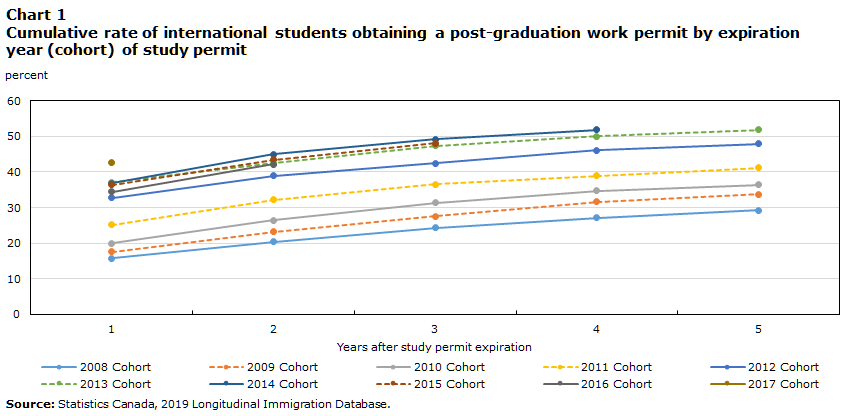
This chart shows the job prospects accessible to overseas graduates after they finish their studies in four prominent places to study: the United States, Canada, the United Kingdom, and Australia. The first thing that stands out to me is how different these nations are in terms of how long students can remain and work after they graduate. Most majors in the U.S. can get 12 months of OPT, but only STEM grads can get those extra years. In Canada and Australia, on the other hand, you can get a work visa for two to three years without having to get a job offer. These flexible approaches make the job opportunity seems more relaxing for overseas students to accumulate experience, and qualify for permanent residency in the country they have been working for a long time. On the other hand, the U.S. system puts a lot of pressure on international grads to find a job after graduation. The chart helps illustrate why many international students choose to build their futures in countries with clearer and more welcoming post-graduation policies.
The message is clear: barriers to international student employment don’t just hurt students; they hurt the country that invited them to study.
 International Students and their challenges