
What It Costs: Stress, Coping & Mental Health
Most international students feel like they don’t fully belong in the soceity around them either their program or their host country. If you’re an international student reading this and you feel tired, discouraged or invisible, you are not alone, and you are not overreacting. The research makes it clear: what you are carrying is heavy because the system adds weight to your shoulders.
Real story from my own experience – as an international student
As an international student from Vietnam, I have experienced many of the challenges described in the research firsthand. During my junior year, I still maintaining a 3.9 GPA and gaining professional experience through my work with The Rambler, Texas Wesleyan University’s student newspaper, I applied to more than ten internship and job positions on platforms like Handshake and LinkedIn. Despite having relevant skills in journalism and communication, I never heard back from most employers. One nonprofit organization invited me to interview, but the whole conversation changed at the moment the interviewer asked me, “Are you an international student?” She followed with questions about my paperwork, sponsorship, and whether they would legally be allowed to pay me. I was rejected without further communication. That moment made me realize that hiring international students is not only difficult for us; it is also confusing and intimidating for employers.
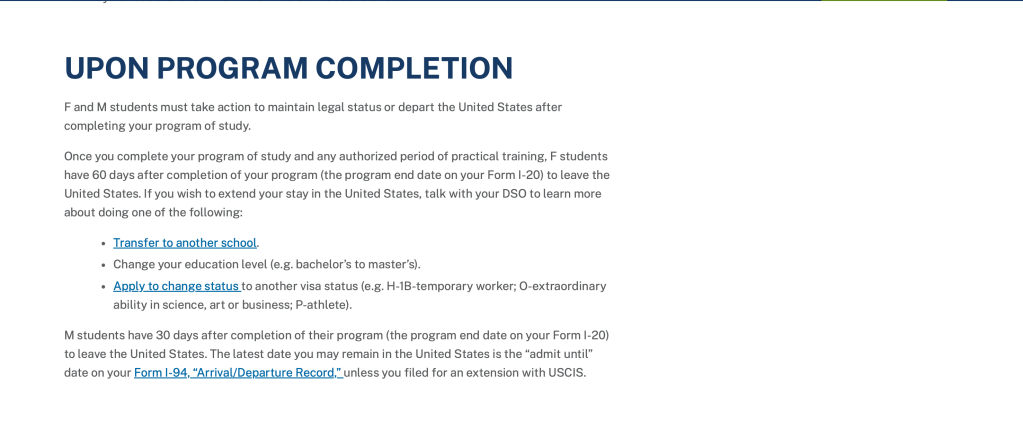
My experience applying for my Employment Authorization Document (EAD card) added more stress to my journey. I submitted my OPT application to U.S. Citizenship and Immigration Services (USCIS) website on October 15, 2025. Although my international advisor explained that processing typically takes three months and barely more than five, my case was assigned an eight-month timeline on December 8; and then the time period extended to nine months the next day. As an F-1 student, I can remain in the United States for only 60 days after graduation without a valid work authorization (Department of Homeland Security, Study in the States), which means long delays put students at risk of falling “out of status” through no fault of their own.
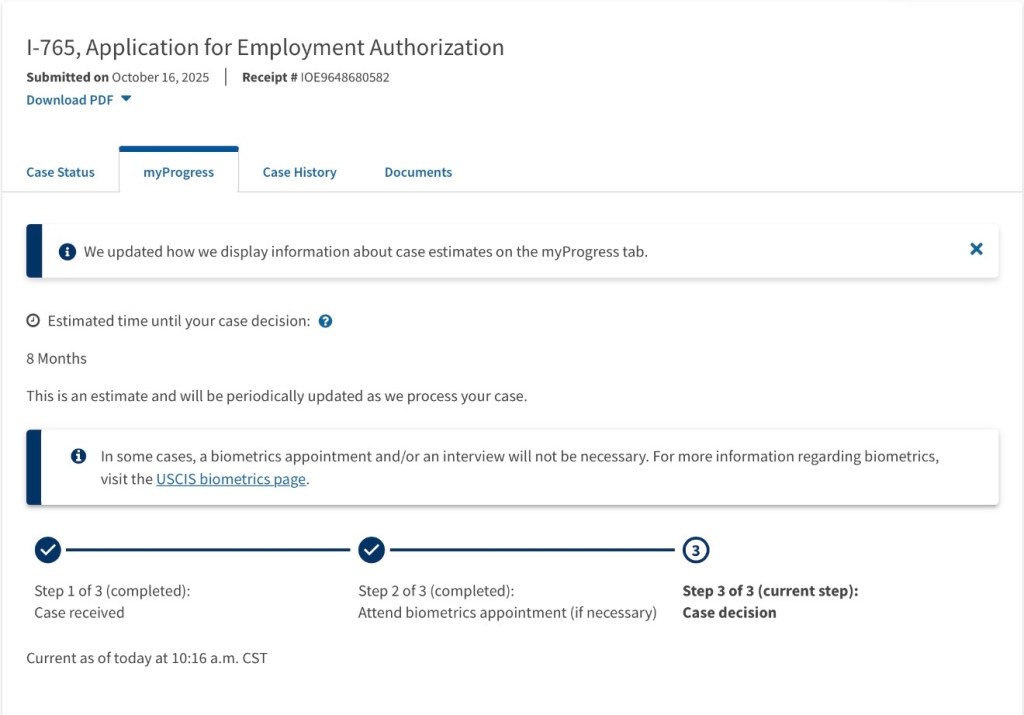
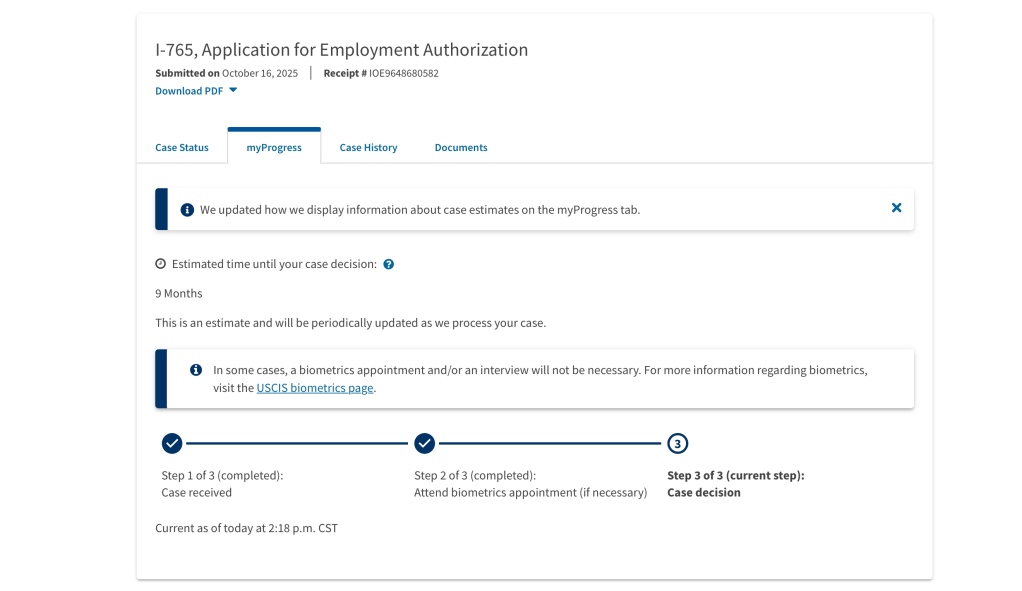
The financial burden is even more difficult. The OPT application costs over $500, my university charged an additional fee, and if we want to upgrade to premium processing, it will cost us $1,700 more – a price many international students simply cannot afford. For some students who already have a job offer, they need to pay the premium fee at any price to keep their position. But others are forced to wait, hope, and worry, knowing that delays could push them out of the country before they even have a chance to begin looking for the job.
Sharing this experience is important to me because international students study just as hard as domestic students, contribute to campus life, and often pay significantly more in tuition. Yet the system makes it difficult for us to stay, work, and contribute to the country that has already benefited from our presence. My hope is that by telling these stories, institutions and policymakers will better understand the barriers we face, and the potential we could offer if those barriers were removed.
Coping Efficacy – Surviving, Not Just Thriving
https://blog.internationalstudent.com/student-visa-in-usa/
Domínguez et al. introduce the idea of “coping efficacy,” express how confident students feel in their ability to deal with career barriers and how to keep their motivation to moving foward. Their research shows that international students often:
- Work harder to prove themselves in academic and clinical settings.
- Rely heavily on peer support and faculty mentors.
- Try to reframe rejection as “not my fault.”
However, constantly having to cope with barriers that other students never face is exhausting and difficult. It can lead to burnout, self-doubt and a feeling that you have to be “perfect” just to earn what others get by default.
Am I Allowed to Be Struggling?
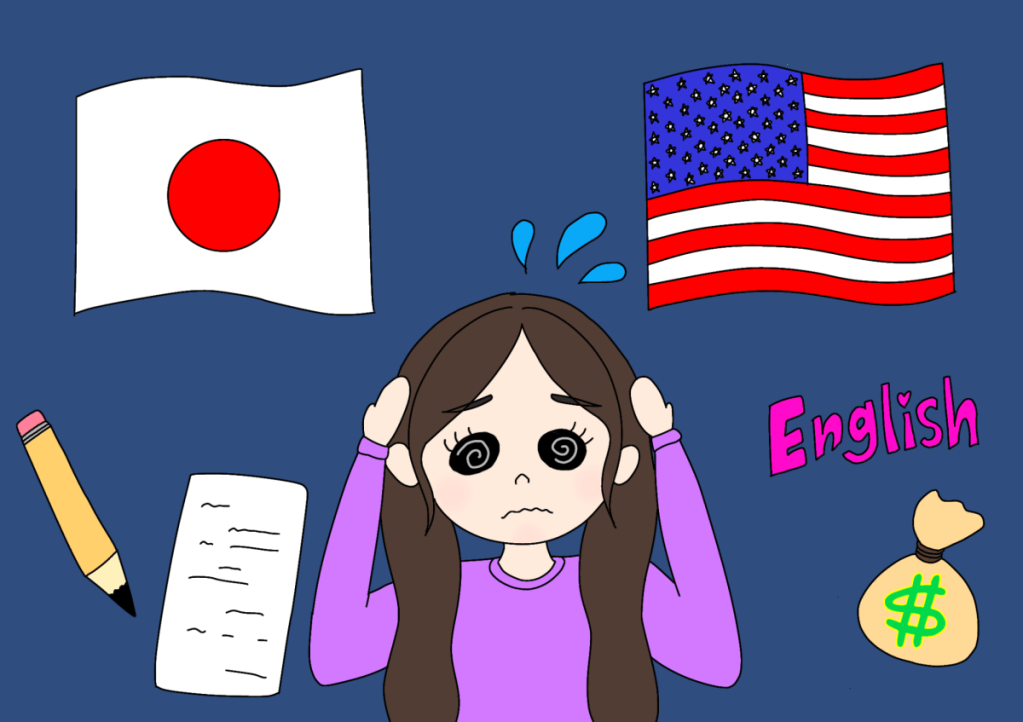
Illustration by Kae Takazawa
Research by Domínguez et al. also demonstrates that international students often carry a heavy emotional burden linked to visa pressure, financial strain, and lack of understanding from others. Moreover, Weiner and Ghazarian observed that students often felt “separate” from their American counterparts throughout the job hunt since they had fewer alternatives. Many participants said that not knowing what would happen with their visa was a continual source of stress. Every year, more than a million foreign students deal with these kinds of stress (Open Doors 2023), therefore these sensations are not unusual. According to students in these studies:
- Anxiety about losing legal status if things go wrong.
- Feeling guilty about family sacrifices and financial strain.
- Isolation when friends or professors don’t understand visa-related stress.
 International Students and their challenges